California Campus Sustainability Leaders Gather to Talk Dorm Reuse and the Circular Economy
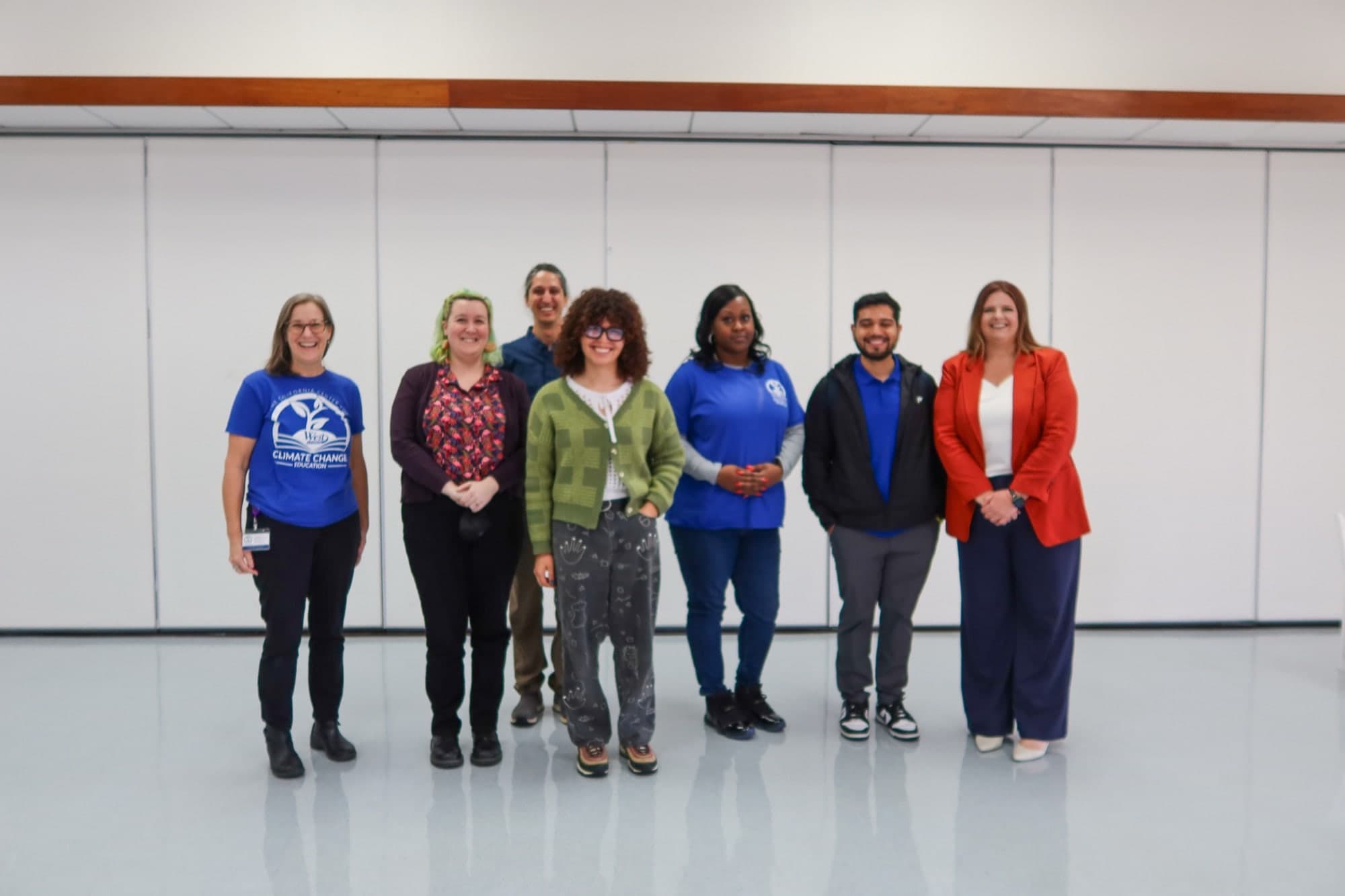
ReDorm, which builds the software campuses use to run dorm reuse programs, and the California Center for Climate Change Education at West Los Angeles College co-hosted a panel on the circular economy Friday, bringing campus sustainability practitioners together with students to talk through how reuse programs get built, staffed, and paid for.
The room filled with students, faculty, and staff over boxed lunches, with additional attendees joining by video. Four talks ran back to back: a framing session on the circular economy as economic strategy, two operating campuses walking through their own move-out programs in detail, and ReDorm on why dorm reuse is the place a campus should start.
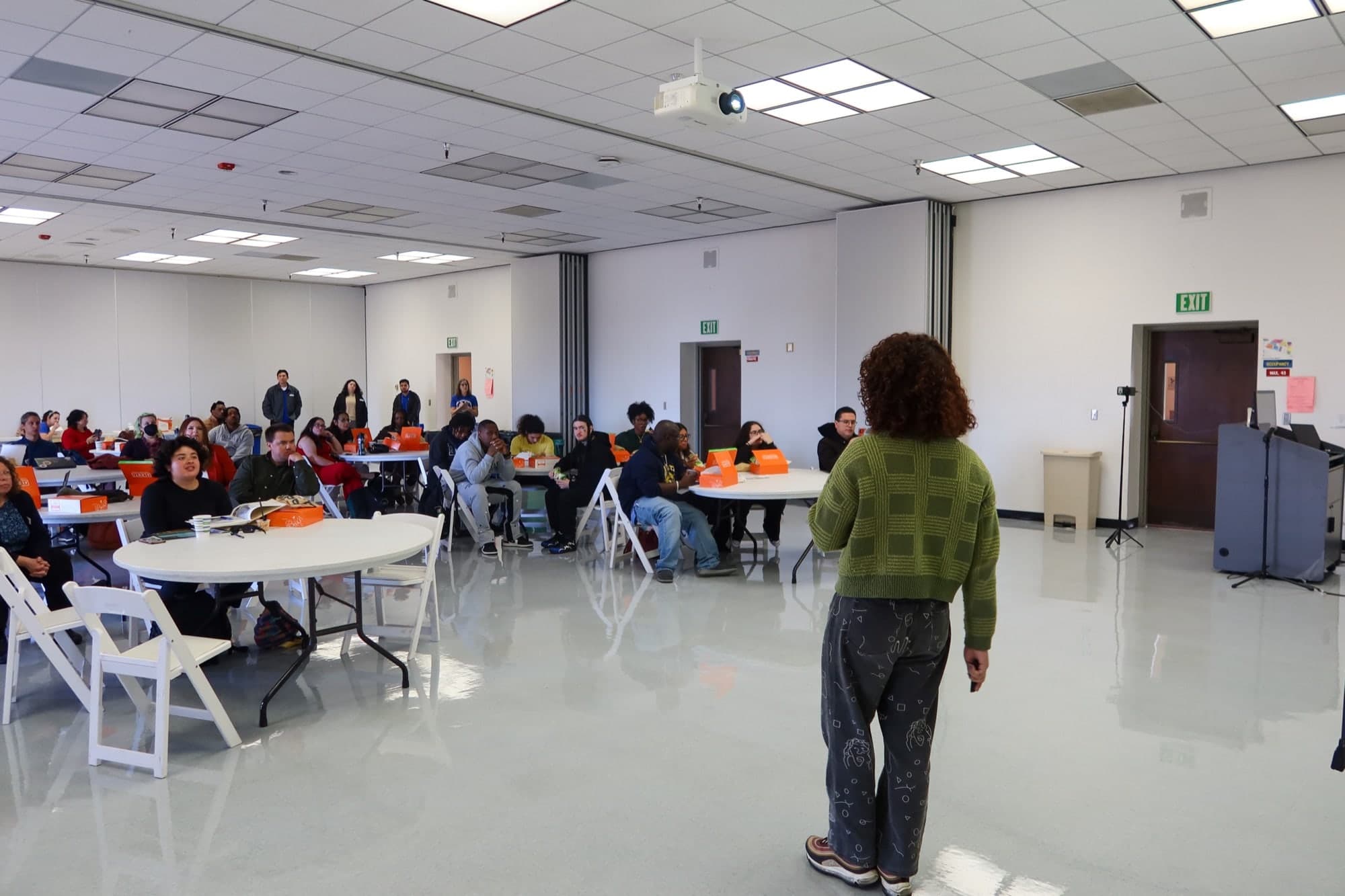
The afternoon opened with the business case. Lindsey Rowell, Chief of Energy, Sustainability and Transportation at the California State University Office of the Chancellor, laid out the global shift from a linear “take-make-waste” model to circular resource management, anchored on three figures.
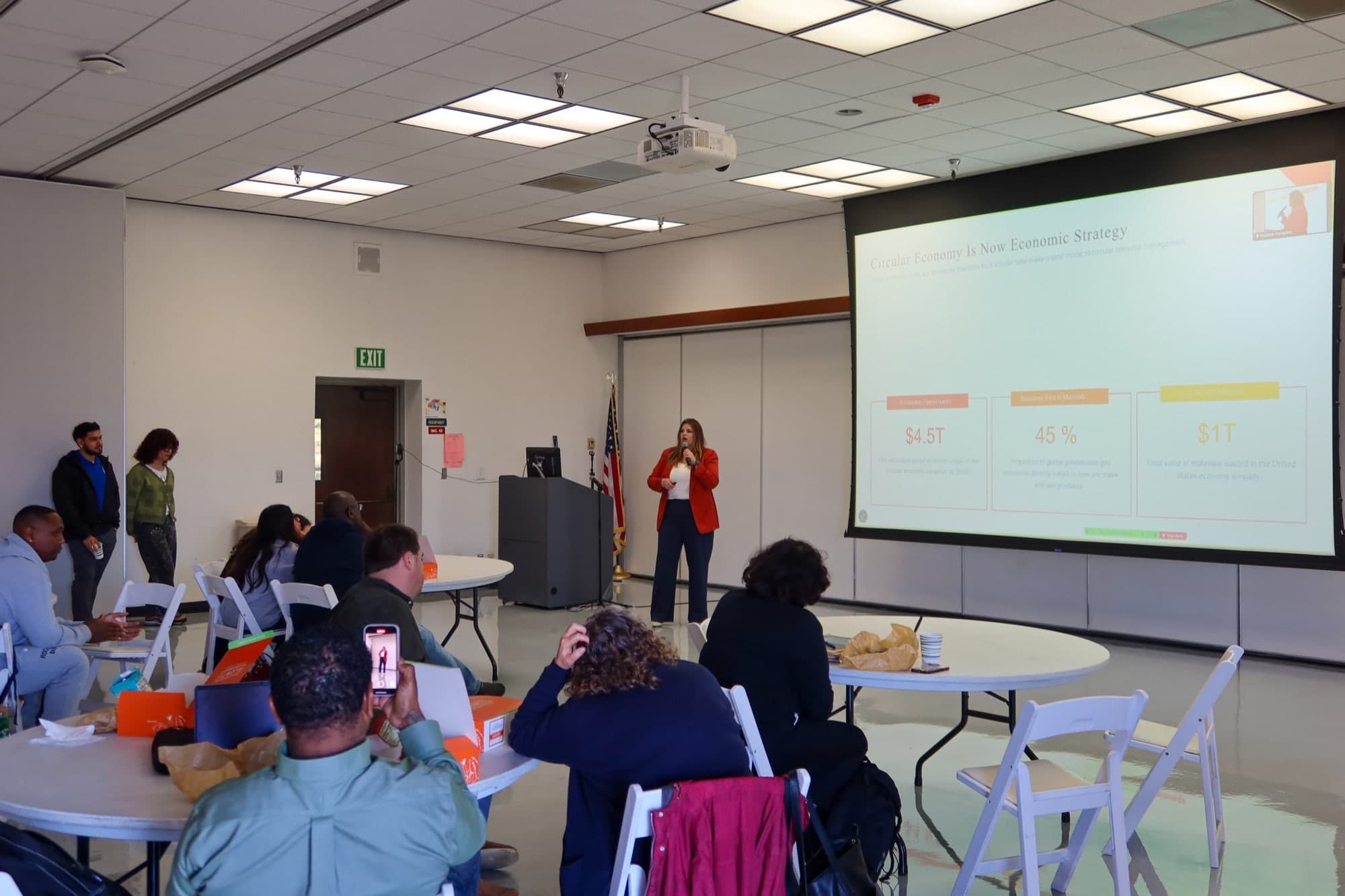
Rowell's argument was clear: campus reuse is not a feel-good charity case, it is a materials-management problem with real financial consequences, as well as opportunities. But it can't be implemented from the top-down, because every campus is different and has its own logistical constraints.
Nikhil Schneider, Assistant Director of Sustainability at Pomona College, walked the room through ReCoop, the college's move-out collection and move-in resale program, starting with photographs of what move-out looks like without one.
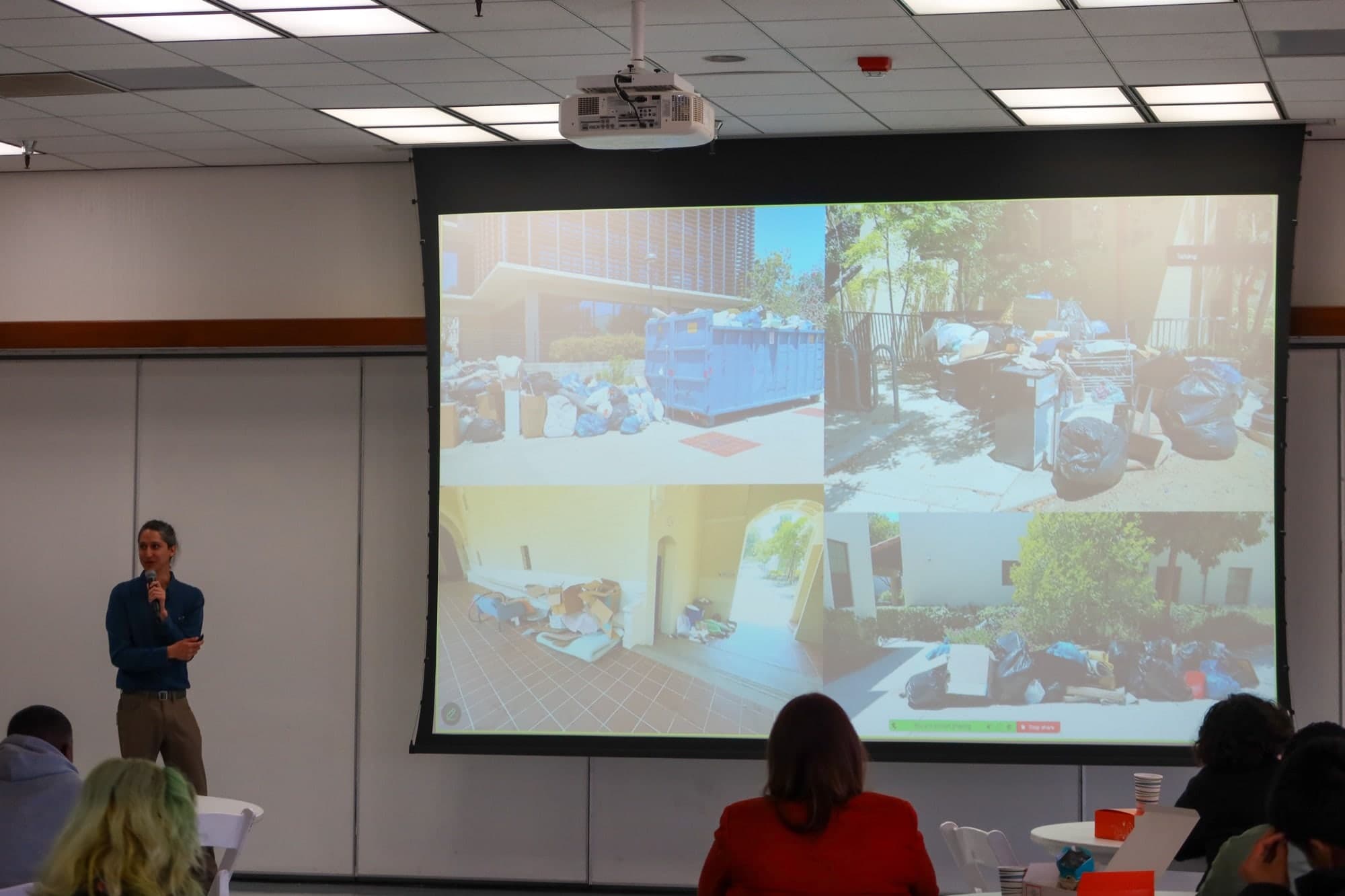
ReCoop's operating model came next. ReCoop hires around 25 students each spring. Those workers stay an additional week after graduation. Donation sites are established and advertised ahead of time, storage is secured before collection starts, students sort and transport everything into that storage, whatever is left over goes to local organizations and the community, and the rest is sold back to students at fall move-in.
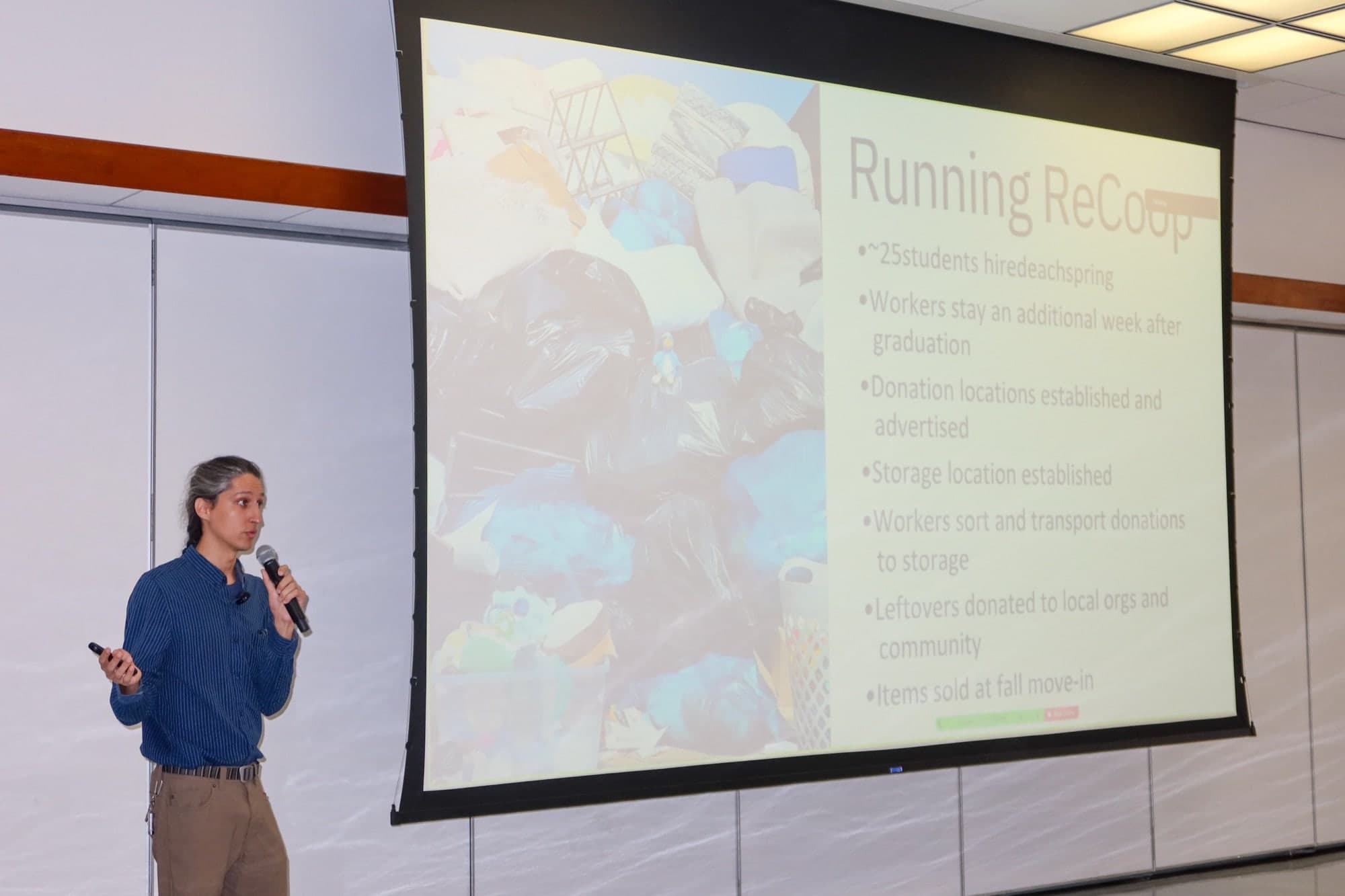
On why the model works now, Schneider credited student behavior as much as infrastructure.
“Thrifting culture is becoming more popular, and students are more interested in participating in the circular economy. Having these programs throughout the year normalizes getting things secondhand.”
It's not just about the climate impact either. “That stat — that reuse programs can generate 200 times more jobs than landfilling programs — I think is definitely at work in this case.”
Jade Goegebuer, Zero Waste Manager at UCLA, presented Sustainable BruIN Move Out, the university's new annual waste-reduction effort. UCLA collected over a ton of material in each of 2024 and 2025 — the 2025 figure from just one on-campus collection day and one off-campus day, down from two of each the year before.
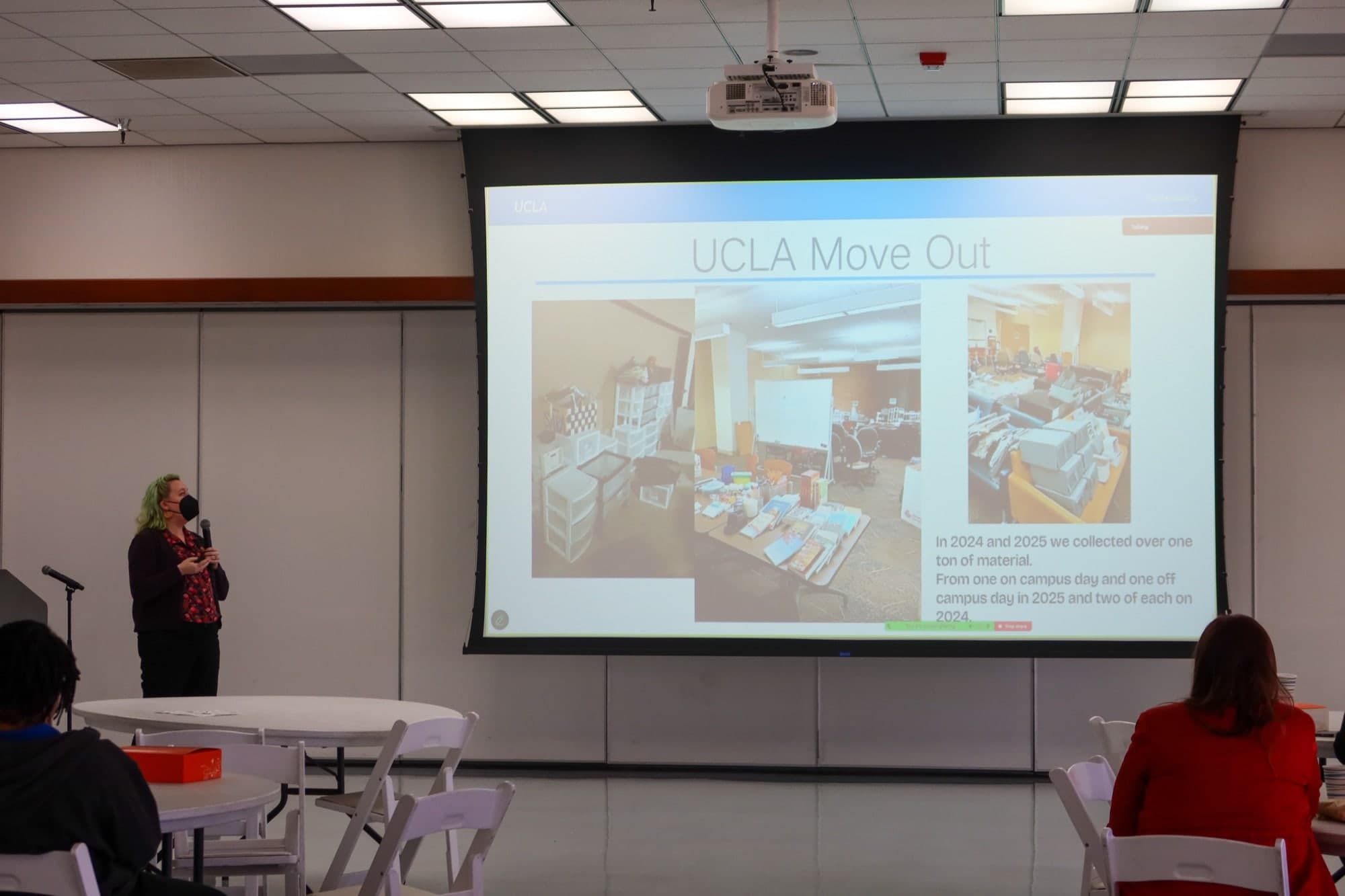
Goegebuer was candid that the program is just getting started.
“We are still very early on in our move-out and we do not have all of it down … it's still very small compared to what we could have.”
She was equally direct about what got the program moving in the first place: press coverage of the belongings left piled around Westwood at the end of the year.
“Sometimes you need some of that bad press to get the people that don't yet care about the sustainability side of things to get on board.”
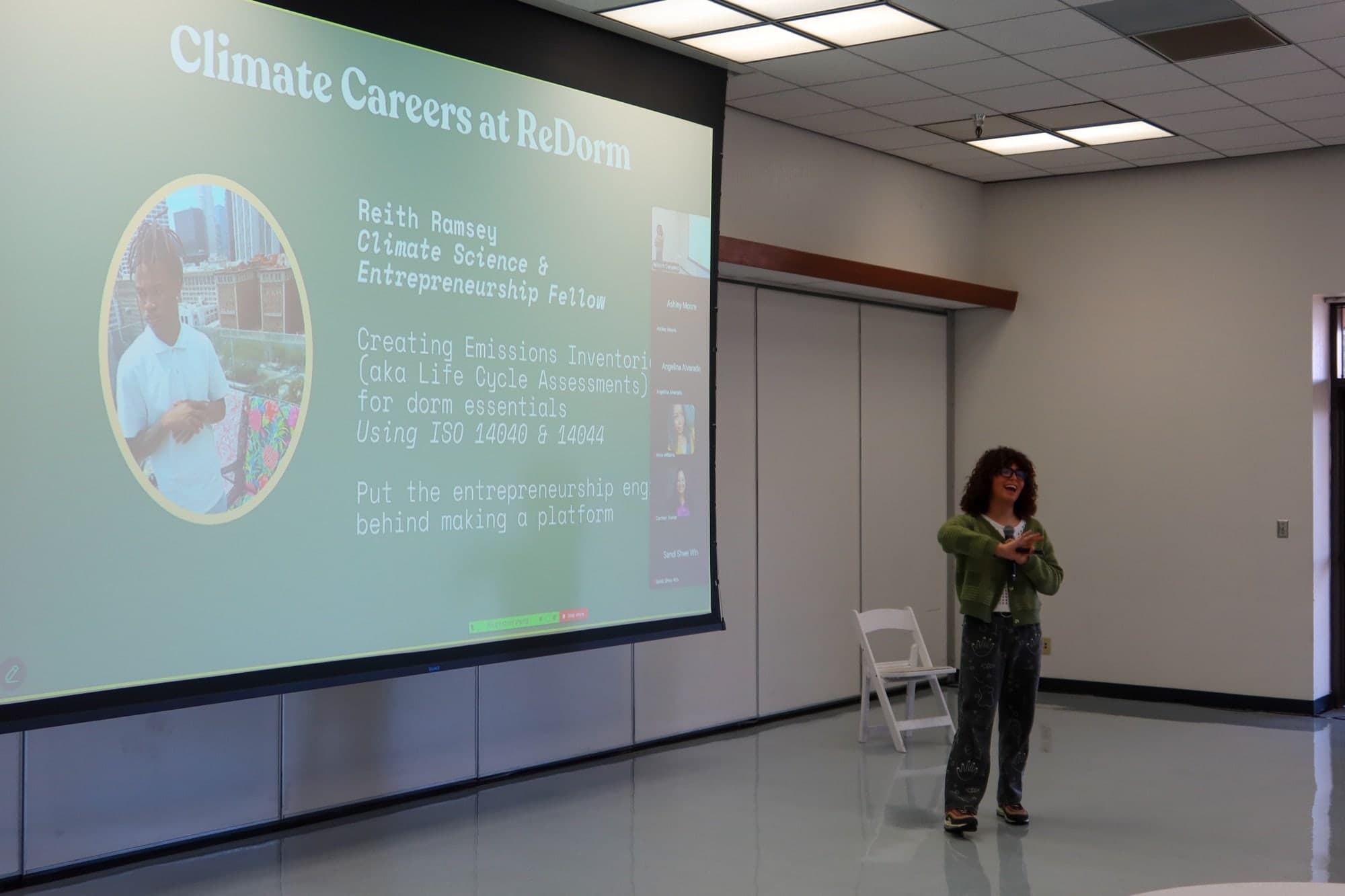
Flores from ReDorm closed by making the case for making dorm reuse programs mainstream.
“Every campus in this room is facing the same problem in isolation and coming up with piecemeal, labor-intensive, unscientific solutions. Getting representatives of the most consequential campuses in California in one room to compare notes on not just the importance, but the logistical pathways in running dorm reuse programs has the potential of accelerating the adoption of effective practices across campuses.”
Move-out is one of the largest concentrated waste events on any residential campus, negatively skewing year-long zero-waste and net-zero efforts in just a few days. Dorm reuse programs turn that predictable surge into recovered material, affordable goods for incoming students, and paid student jobs. It's true — historically starting a dorm reuse program is hard, and sustaining it is harder, but by bringing practitioners together to compare that scaffolding, ReDorm is accelerating the movement towards circular economy on campuses, through dorm reuse.
About ReDorm
ReDorm makes dorm reuse programs easier to start and sustain, giving campus housing and sustainability teams the inventory, storefront, and impact-tracking tools to run move-out and move-in as one connected program.