
ReDorm Case Studywww.redorm.co/case-studies/uc-san-diego
UC San Diego · Case study
How UC San Diego started their dorm reuse program
A case study of the 2026 move-out to move-in reuse pilot
ReDorm partner case study: UC San Diego · published October 2026
Abstract
UC San Diego has added about 10,000 student beds in a decade, and its move-out waste tonnage has risen with it, by 82 tons in 2026 alone, to 371 tons. Pioneered by Elizabeth Lin in May 2026, the Sustainability & Zero Waste Programs Team partnered with ReDorm to run a move-out to move-in reuse pilot across 3 of its 8 undergraduate colleges. The impact of ReDorm on the pilot: 1. Faster inventorying (one student inventoried in 4 days, work otherwise modeled to take about 11 weeks by hand), 2. Surefire sales (the online pre-order shop had 94% of its stock reserved within 48 hours of opening, with no marketing, weeks before move-in even happened), 3. Immediate reporting (AASHE STARS-quality data on weight and embodied carbon as well as sales insights were produced on demand rather than over months), 4. Huge return on investment (the program produced about $23,307 of measured value, from labor savings, student savings and waste-hauling costs avoided). The results helped establish the pilot as an annual program and the team plans to expand to five colleges, then all eight.
Keywords: dorm reuse, college move-out waste, move-in free store, zero waste, AASHE STARS, impact reporting
Highlights
1 Introduction
1.1 A prior attempt
UC San Diego did not need convincing that dorm reuse was worth doing. It had already tried, by hand. One member of the housing team tracked everything that came in and everything that went out on spreadsheets, and booked pickup appointments with students one at a time.
There was no system, and at the end there were no real numbers. Asked how many bed frames had come in, the honest answer was "pretty much just a guess." By the team's account, a defensible impact report took months to assemble and still rested mostly on estimates.
“It was just me trying to keep track of everything that was given to me and everything that was given out. It was like a full-time job, and I have a whole other full-time job. It wasn't sustainable for our department.”
1.2 A growing waste stream
UC San Diego has added about 10,000 beds in a decade [3]. The Theatre District (2,000 students) and Pepper Canyon West (1,300) opened in 2024 [1], and Ridge Walk North moved in 2,400 more in fall 2025, taking campus housing to a record 22,000 [2]. Next is Pepper Canyon East, up to 2,000 beds in its first phase, targeted for summer 2029, and up to 6,000 when complete [4], on the way to a four-year housing guarantee [2].
Every one of those students moves out in the same week. They have to be out of their rooms within 24 hours of their last final, the same week as commencement, so without a robust system, thousands of perfectly good dorm essentials otherwise head for the roll-off bins. Each new building creates an opportunity to divert useful items from landfill, and makes a program that can handle it at scale more urgent.
1.3 Institutional goals
Move-out reuse is not a side project. It lands on four commitments the campus is already measured against.
UC zero waste policy
50%
less waste per person by 2030
UC policy asks every campus to cut waste per person 25% below 2015 to 2016 levels by 2025 and 50% by 2030, and to divert 90% from landfill, in a set order: reduce, reuse, then recycle [5]. UC San Diego passed the 2025 target, at 35% as of 2024 [6]. Reuse is the step that moves both numbers: an item a student takes home never becomes waste, while a recycled one still counts as waste generated.
AASHE STARS
Platinum
UC San Diego's STARS rating, 2024
The rating runs to December 2027 [7], and the next report will be under STARS 3.0, which names this kind of program directly. Credit OP 11 recognizes a reuse program where students donate personal items for redistribution [8], and OP 12 counts waste prepared for reuse toward the diversion rate, in metric tons [9]. ReDorm's AASHE STARS Reporting tab auto-generates that data for easy input.
California
75%
statewide goal to reduce, recycle or compost waste
California's statewide goal under AB 341 is 75% [10], and state agencies must divert at least 50% [11]. New state legislation all point the same way [12][13]: work on source reduction, and count what gets reused.
UC Office of the President
90%
of municipal solid waste diverted from landfill at each campus
The University of California Office of the President sets this goal for every campus [14], and UC San Diego is working toward it alongside the rest of the UC system. Every dorm essential a student takes home again is waste that never reaches the landfill.
1.4 Aim of the pilot
The pilot asked whether a small team could run move-out collection, summer cataloging and a move-in shop as one program, and come out of it with defensible data rather than estimates. Section 2 describes how the program ran (Appendix A explains how it was measured), Section 3 reports what it achieved, and Section 4 discusses what the results mean for the campus and for programs like it.
“Using ReDorm helped legitimize the sustainability pilot that we were doing anyway. And now it opens the door for more collaboration because what we need is buy-in and being able to show numbers, to show impact, to prove our purpose.”
2 Method
2.1 Setting and participants
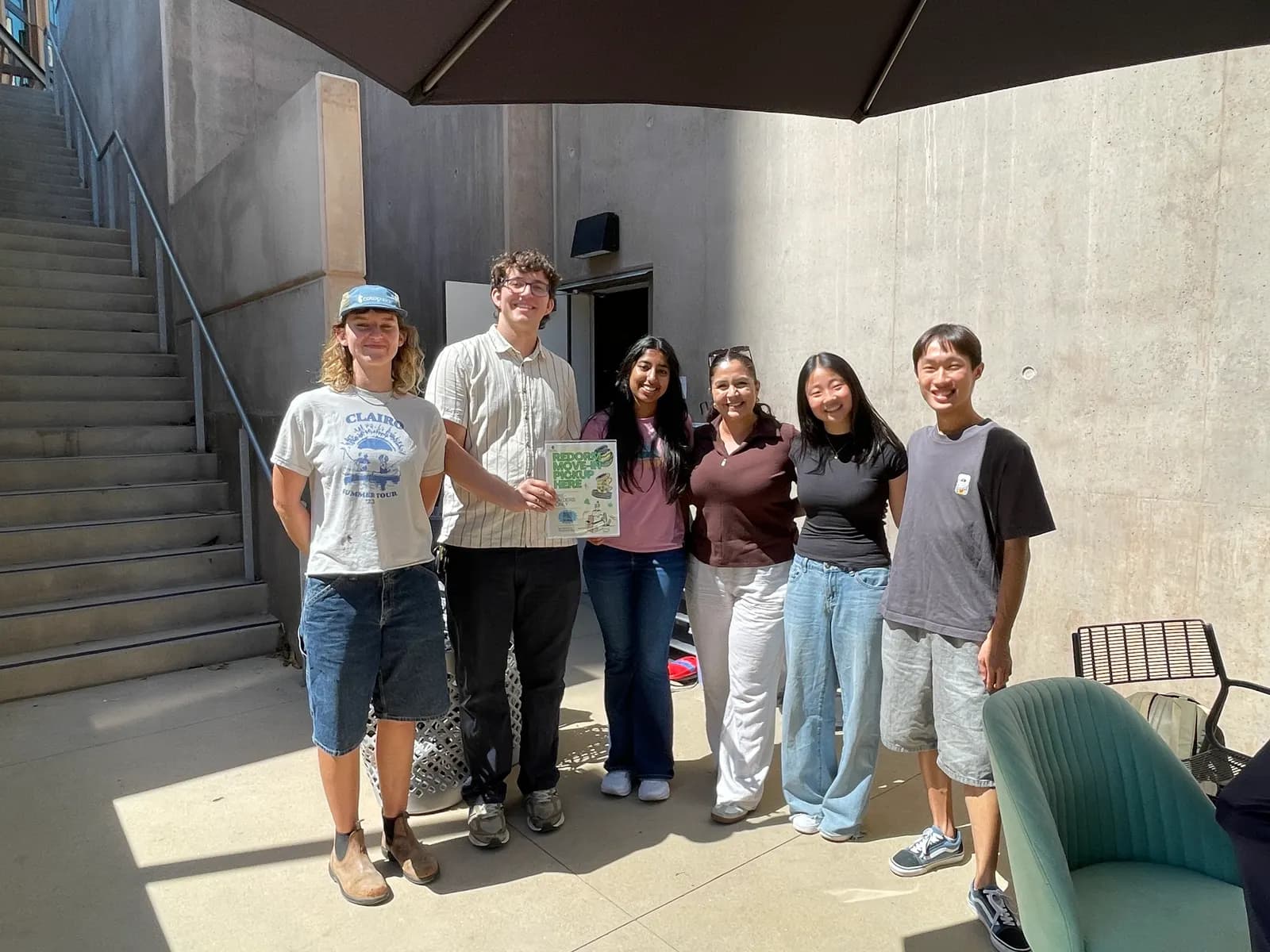
The pilot ran across 3 of UC San Diego's 8 undergraduate colleges. It was led by the campus Zero Waste Manager with staff from Sustainability and Housing, and run with two student groups: the EcoNauts and the Green Programs Interns, Eva and Riccardo, a collaboration across departments. Collection ran from May 22 to July 29, 2026; the move-in shop opened on August 26, and storefront orders ran from August 21 to September 23.
2.2 Collection and cataloging
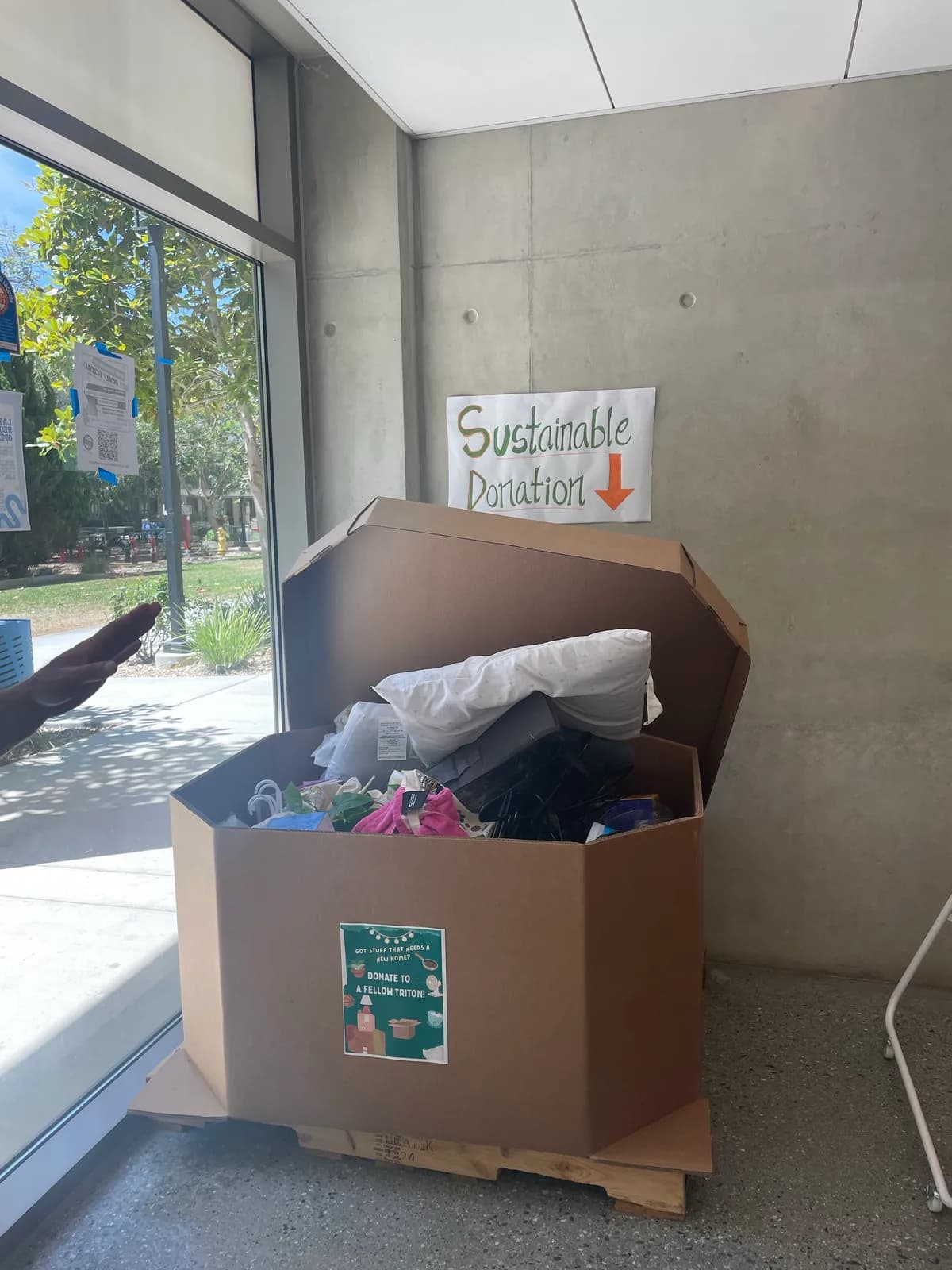
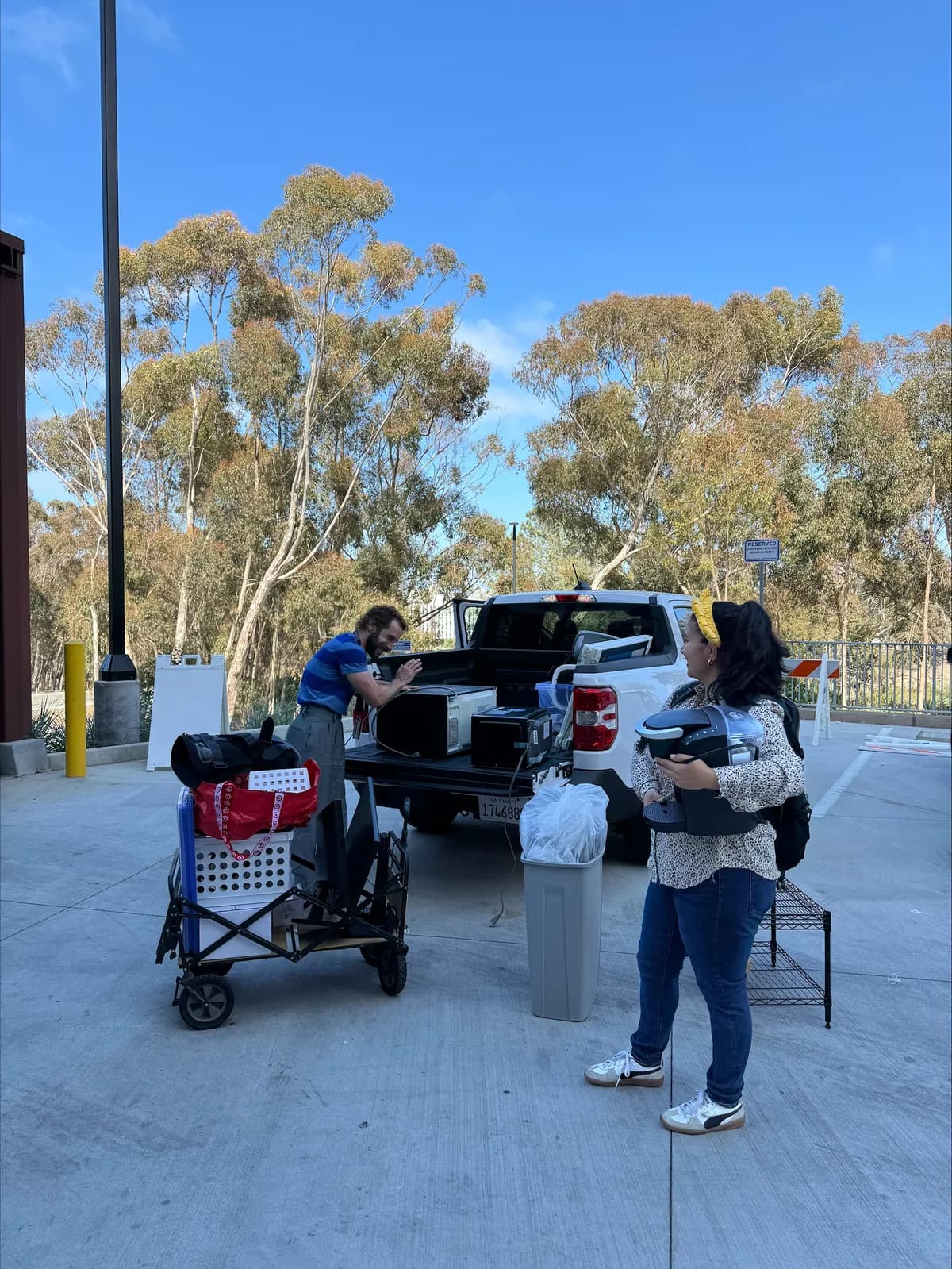
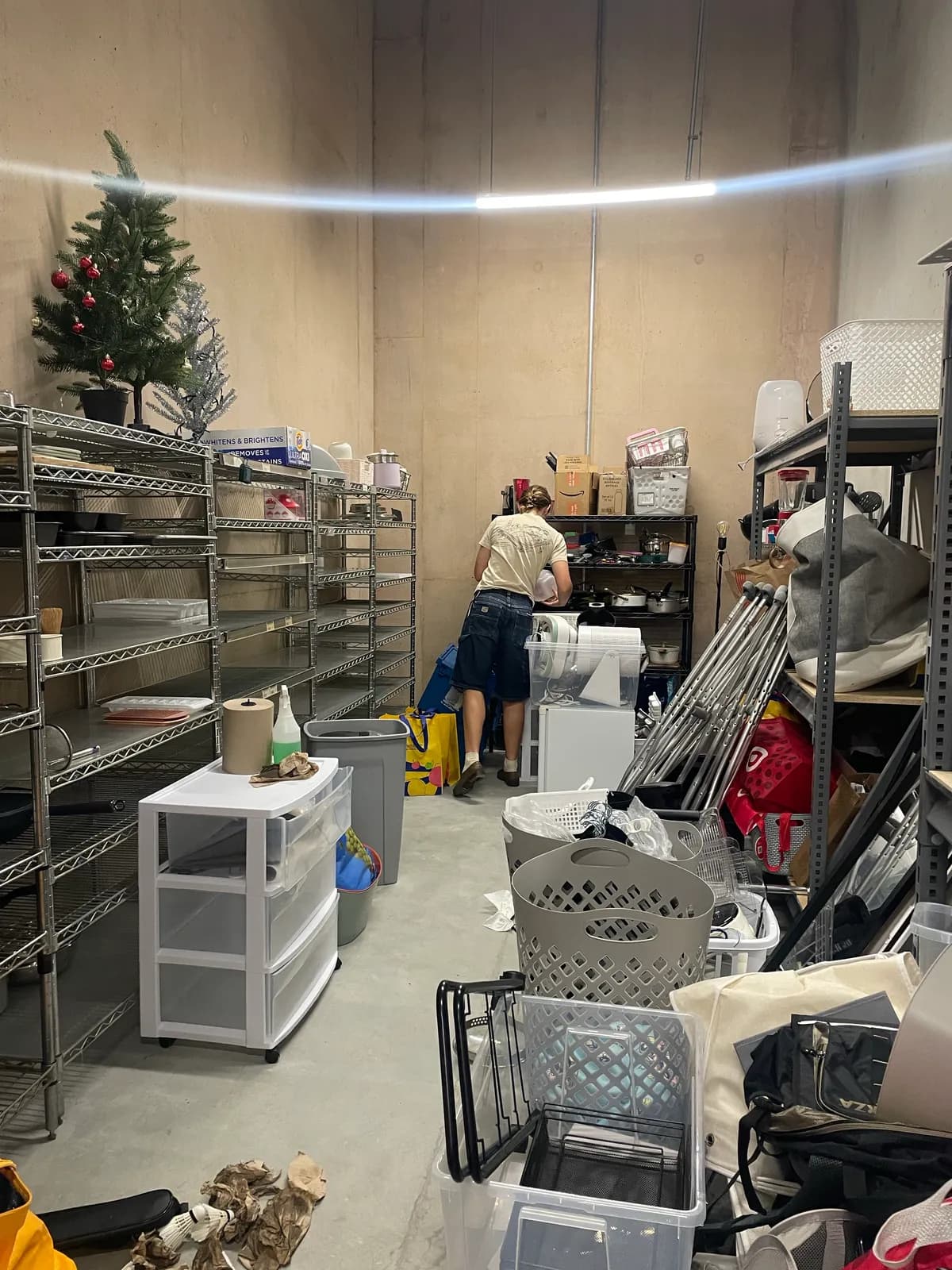
Staff, EcoNauts and Green Programs Interns hauled donations across campus, in wagons, carts, and trucks, into a storage room the neighborhood was designed with and planned as Student Needs Storage. That room is a lesson for future developments: finding space is the first obstacle to a reuse program, so building student needs storage into a building's design is what lets one start. Each item was then cataloged in ReDorm. Instead of manually weighing items and taking pictures, ReDorm's database of products made it so that inventorying was just a matter of finding the product and adding quantity. They had planned for it to take an entire summer with multiple people. Instead, it took one student, Eva, 4 days to track over 1600 items, about 1.2 tons of material.
“Once we had gotten everything into the room, I couldn't imagine having to deal with Excel. We had a whole team prepared, but we didn't end up needing it because it was so easy to use.”
“It would've taken me so long, taking pictures, weighing everything. Instead all I did was search and add. The other team members were able to look online to track progress, but I ended up being the only one actually inputting stuff into ReDorm.”
(a)
(b)
(c)
2.3 The move-in shop
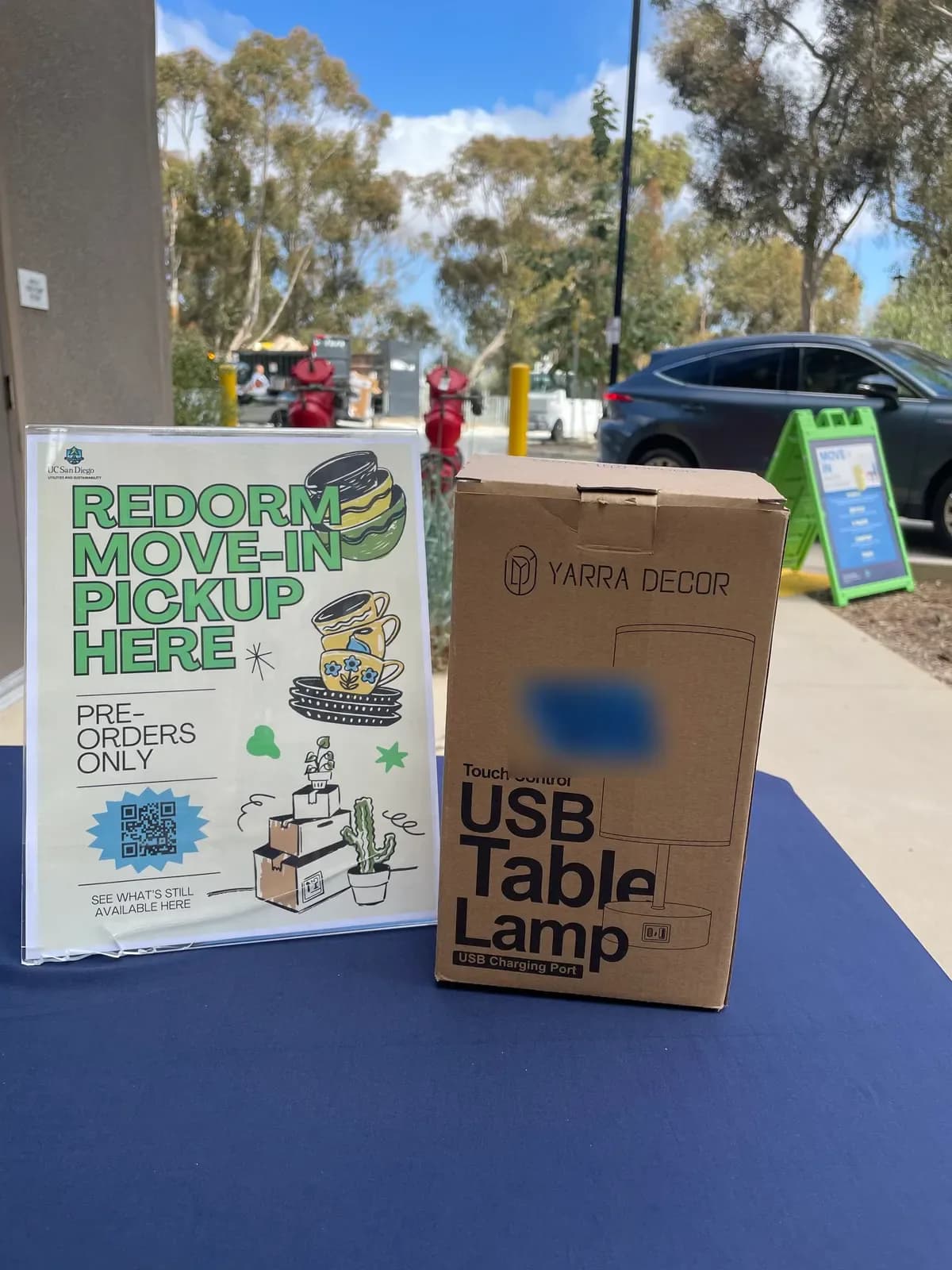
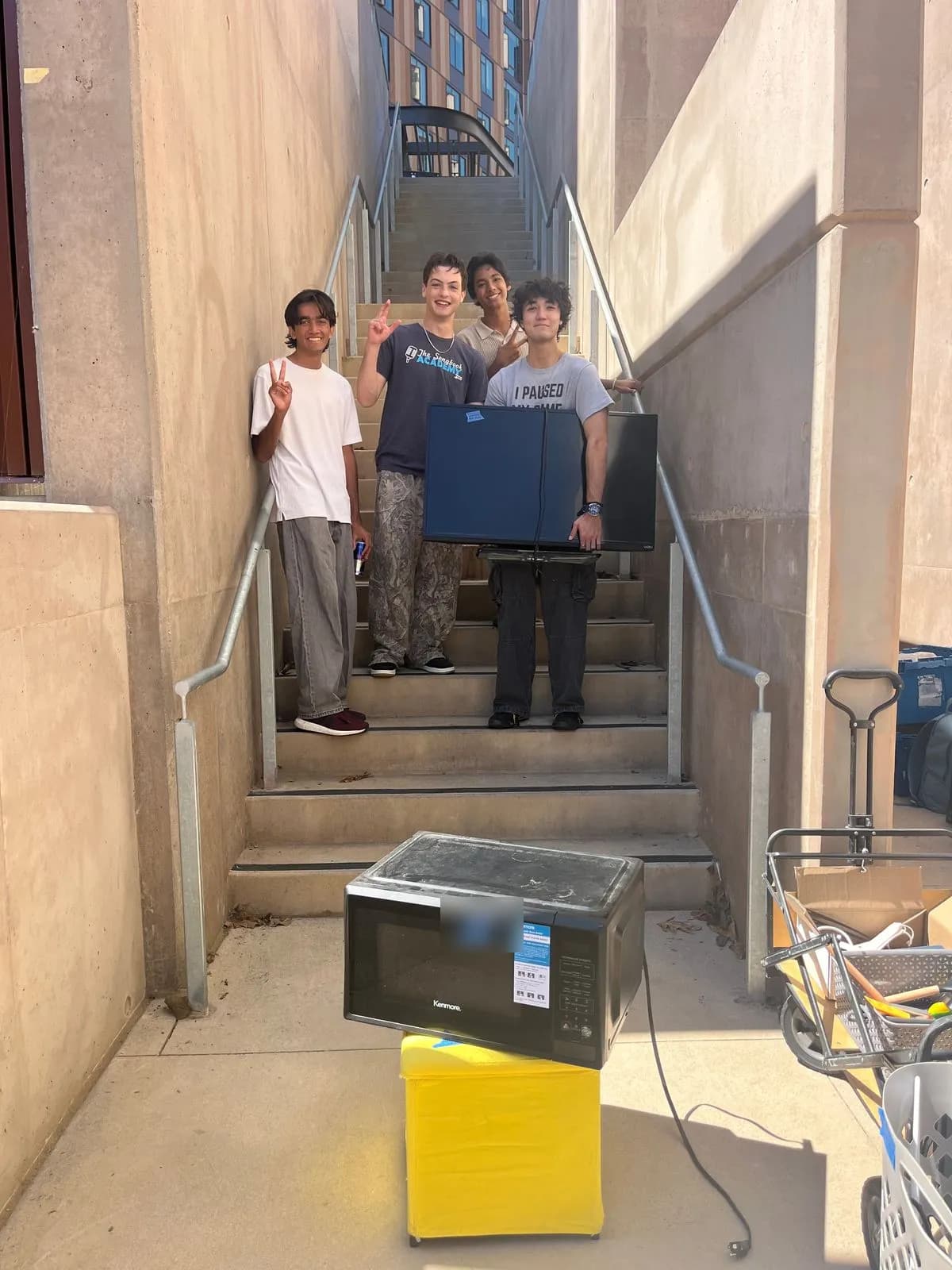
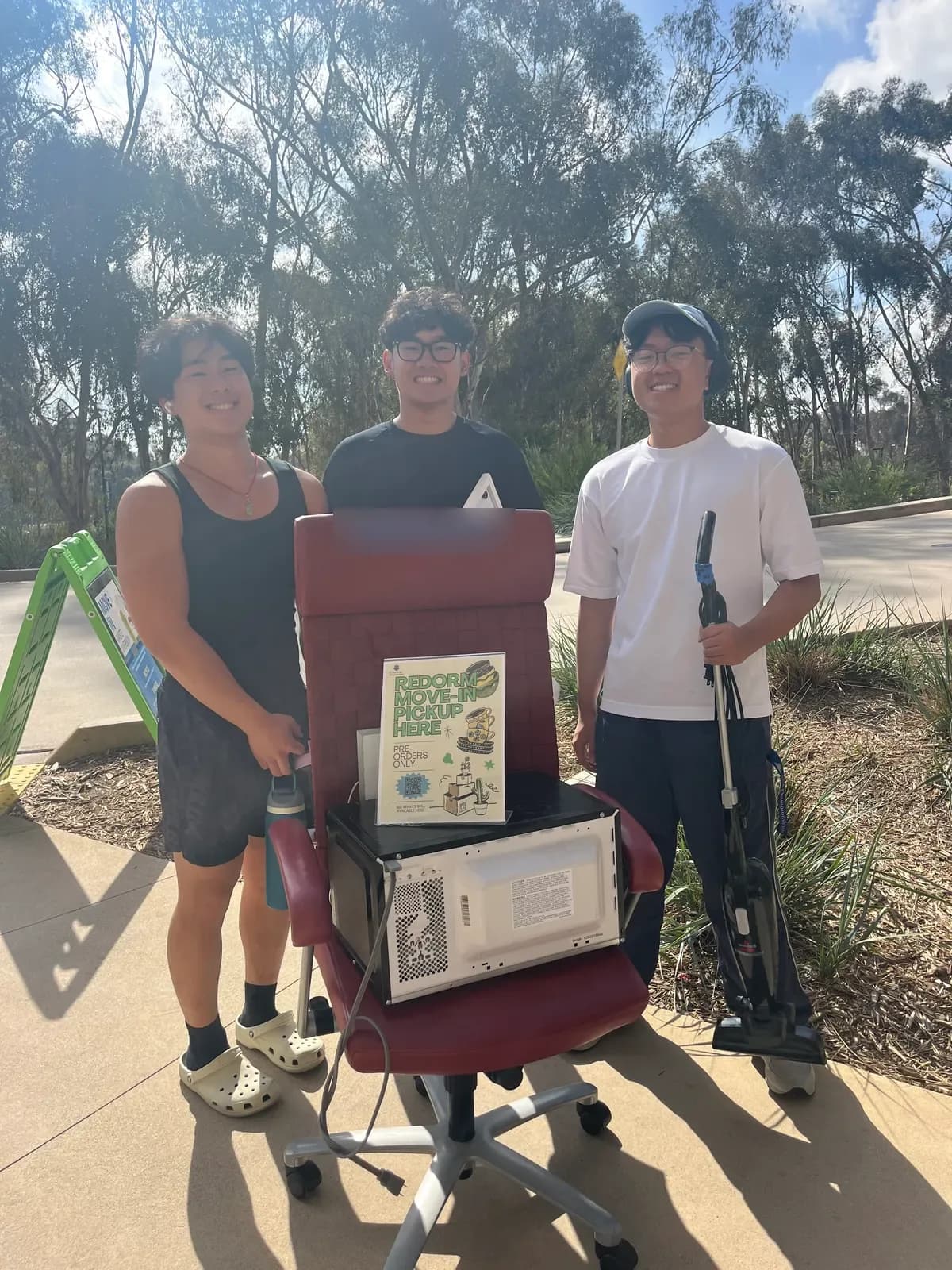
Over the summer the goods became a free shop under UC San Diego's own name. Students reserved items online and collected them in scheduled pickup slots during move-in week. There was no campaign: the link sat inside a move-in email.
3 Results
3.1 Months saved
The largest return was time. Cataloging 93% of the season's donations took four days, June 22 to 25, by one student working mostly from a phone. The same work by hand is modeled at 438 staff hours, about 11 weeks of one person's full-time work. The impact report, which had taken months to assemble, was available on demand the moment the season ended (Table 1).
Table 1. Time to complete the program's core tasks, by hand and with ReDorm
| Task | By hand | With ReDorm |
|---|---|---|
| Cataloging the season's donations | About 11 weeks of staff time (438 hours, modeled) | 4 days, one student |
| Producing the impact report | Months, and mostly estimates | On demand: one click for a live link or a PDF |
| Scheduling pickups | Appointments booked one student at a time | Students reserve their own slot when they order |
Note. Hand cataloging is modeled at 15 minutes per item for 1,754 items. Report time by hand is the team's own account.
3.2 High student and parent demand, not enough supply
Students reserved 78% of the stock in the first six hours and 94% within two days, with 128 orders in the first six hours (Figure 4). 363 students signed up to shop and 159 could order before stock ran out: the limit was supply, not interest, indicating that the pilot needs to grow.
Share of the stock reserved after the shop opened
- 6 hours78%
- 12 hours81%
- 24 hours84%
- 48 hours94%
- 72 hours97%
- 1 week99%
128
orders in the first 6 hours
0
marketing campaigns behind it
363 students signed up, and only 159 could order before it ran out. The limit was supply, not interest.
“I asked them, 'How did you find out about this?' They said, 'It was late at night, I got an email, I clicked the link, and I was able to reserve very easily.' They were super excited. Then parents were posting it on Facebook Marketplace and Reddit threads for UCSD parents, so the word got out with very little marketing.”
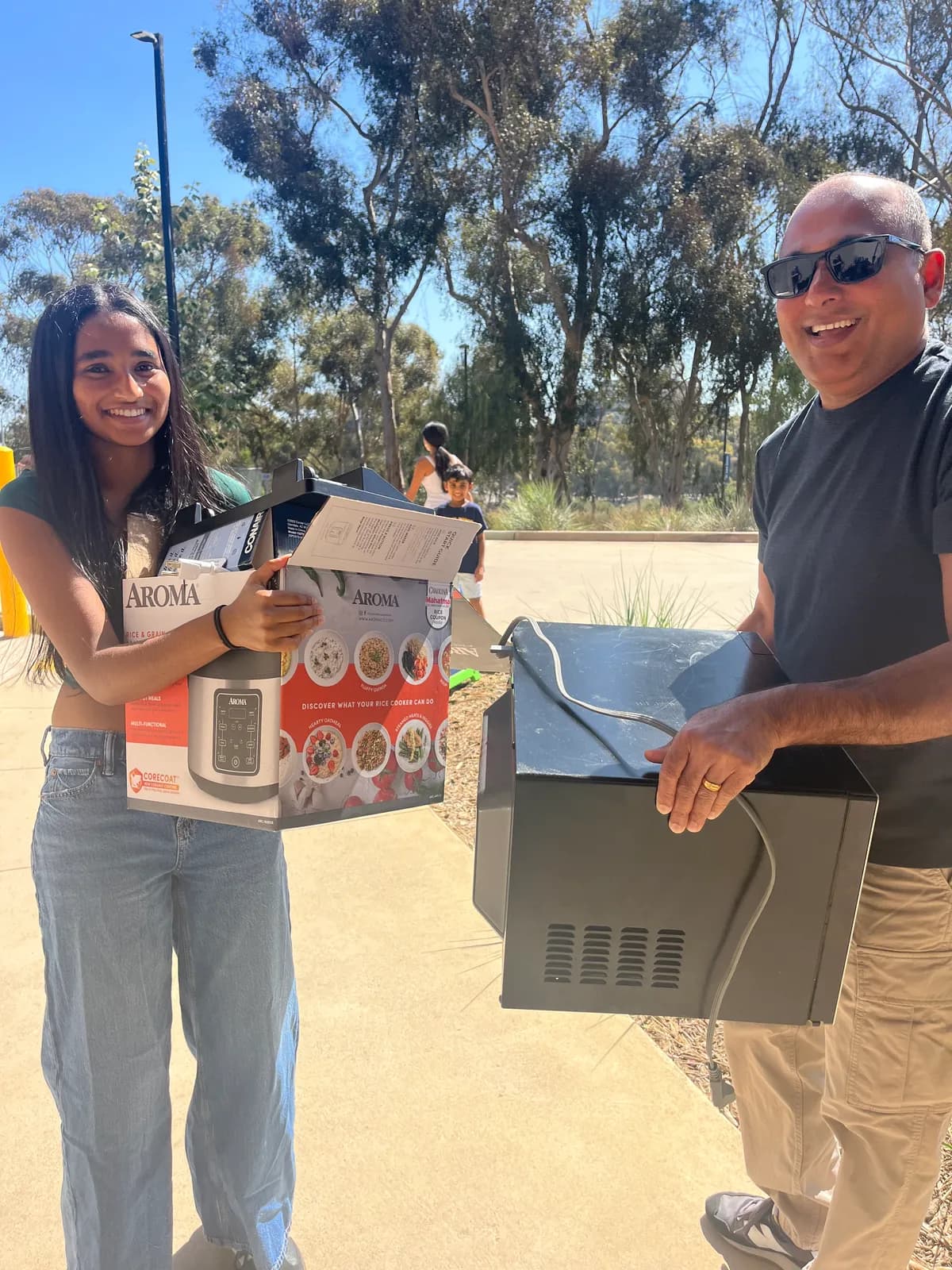
“Any time a student would come get their order and they're like, 'Oh, I saw the size of my dorm. That's not going to fit,' they were able to easily cancel the order. Immediately someone else would order it by the end of that day. Nothing that was of value to students stayed back on the market very long.”
- 204 of 363students who signed up never got the chance to order
3.3 Financial return
Adding what the season delivered gives about $23,307 of value before a single item was sold: $14,401 saved by 159 students, $91 each, against buying new; $8,770 of staff time not spent hand-logging; and $136 in landfill fees avoided [15]. That is 4.7 times the annual list price of ReDorm Gold for a campus this size [17] (Table 2).
Table 2. Return on one season, UC San Diego, 2026
- $14,401
Saved by students against buying new
Measured: retail price of each product handed out
- $8,770
Staff time not spent hand-logging
Estimated: 438 hours at $20 an hour
- $136
Landfill fees avoided
1.3 tons at Miramar Landfill's $105 a ton, before hauling
Value in one season
$23,3074.7x
the annual price of ReDorm Gold for a campus this size ($4,999)
Published list price for campuses with 7,500+ students in housing.
3.4 Environmental impact and reporting
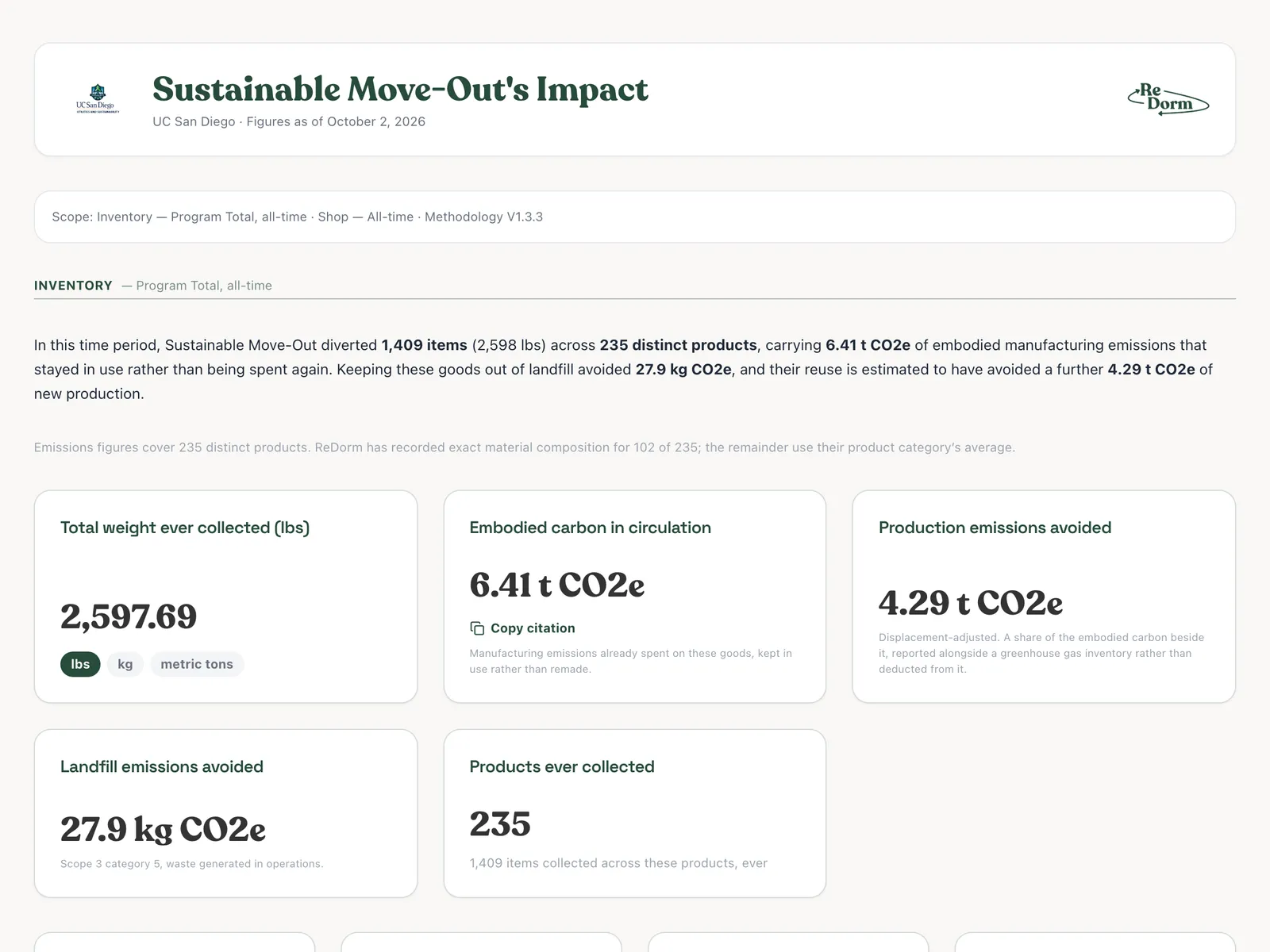
The program kept 1.3 tons out of the bins: everything handed out, plus what is stored for next season. That material carries 6.4 metric tons CO2e of embodied carbon kept in use, and an estimated 4.3 metric tons CO2e of new production avoided [16].
 Generated with ReDorm
This is UC San Diego's real pilot data, instantly generated with ReDorm.
When the season ended there was no spreadsheet to build: the report was already there, ready to share as a live link anyone can open or as a PDF for anyone who wants a file.
Share Report
The same choices every campus gets from ReDorm's Share Report button. Take it out however you need.
This is literally what the ReDorm platform makes in one click.
Impact report (PDF): PDF, 10 pages, 450 KB. Read it here
“Reuse is the hardest metric to capture and report out on. With ReDorm you get a tracking tool that gives me one less report, one less Excel, that I ever have to do. That is awesome. When you work in sustainability, it's all about communicating, and by instantly having that data, it makes it easier to move on to the next program, which probably already started. I really like that ReDorm helped close out the pilot super quick.”Elizabeth Lin, Zero Waste Manager, UC San Diego
AlsoEDCO's Spring 2026 Move-Out ReportMove-out tonnage by residential area and material stream, with three-year trends, from UC San Diego's waste hauler. PDF, 8 pages, 1.8 MB
4 Discussion
4.1 From pilot to program
This was a pilot, and it ran like one: three of UC San Diego's eight colleges, a handful of staff and students, a borrowed pickup truck and one storage room. What it left behind is the case for the next season. Because every item collected and handed out ran through ReDorm, the team does not have to reconstruct the year to pitch the next one: diversion by weight, embodied carbon, student savings and student demand already sit in one report, ready to put in front of the colleges that sat this year out. Only 3 of UC San Diego's 8 colleges took part, and 204 students who signed up never got the chance to order. The plan is five colleges next year and all eight after that. At this year's pace, all eight would be more than two and a half times this season, assuming each college gives as much as this year's three.
“When we were first pitching to colleges to run this program, we had no hard data or metrics to back up why we need to do this. But with this pilot and data, we can put it into a deck and have a more polished presentation for the stakeholders next year.”
- 3 of 8colleges took part in the pilot
“This pilot, it was Eva, Riccardo, Andy, me, a borrowed pickup truck, and a dream.”
“Showing the success of the sustainable move-out to the other colleges that did not participate… saying, hey, this is how much these three colleges were able to divert and support their students… making it more of a must-do instead of a pilot. Supporting the effort through the data collected through ReDorm, because it's easy, and it's easier to sell that way.”
- 5colleges is the goal for 2027, before all eight
“The colleges that participated were too humble. They did a lot just by giving us that space and piloting this… Allowing all of the colleges to participate in the move-in market is what really allowed all the items to be claimed within 48 hours.”
5 Conclusion
A reuse program UC San Diego had tried before, and found unsustainable by hand, ran in its first season with a fraction of the effort: a summer of cataloging in four days, a shop that sold out in two, and an impact report that was ready the moment the season ended. The data it produced is what turned a pilot into a program.
“A big missing piece in sustainability is communicating all the different efforts that are happening. A lot of our students think that we're not doing enough, and we're trying our absolute best with the resources we have. So ReDorm can help us be resourceful and bring programs to life and expand them on campus.”
“The hardest part of the process was the labor, the convincing people. But the easiest part was ReDorm.”
Acknowledgements
"With huge thanks to UC San Diego's Zero Waste, Sustainability, EcoNauts and Green Programs Intern teams. Because of your belief in our platform, together we proved that dorm reuse programs can and must be easier to run, in order to scale and sustain them. With your feedback, the ReDorm platforms drastically improved their capabilities for future campus partners. I can't wait to see how we keep investing in making dorm reuse mainstream, and not the waste streams." - JJ Flores, ReDorm CEO Quotes are from recorded calls with the UC San Diego team, lightly trimmed for length.
References
- [1]UC San Diego Today. (2024). UC San Diego welcomes students and two new campus neighborhoods. https://today.ucsd.edu/photo-essays/uc-san-diego-welcomes-students-and-two-new-campus-neighborhoods
- [2]UC San Diego Today. (2025, November 6). Celebrating our newest community: Ridge Walk North Living and Learning Neighborhood. https://today.ucsd.edu/story/celebrating-our-newest-community-ridge-walk-north-living-and-learning-neighborhood
- [3]UC San Diego Today. (2025, November 21). Living and Learning Neighborhood opens at UC San Diego. https://today.ucsd.edu/story/living-and-learning-neighborhood-opens-at-uc-san-diego
- [4]The Regents of the University of California. (2024, July). Pepper Canyon East District, preliminary plans funding (Item F2B). https://regents.universityofcalifornia.edu/regmeet/july24/f2b.pdf
- [5]University of California Office of the President. (2026). Sustainable Practices Policy, section III.F, Zero Waste. https://policy.ucop.edu/doc/3100155/SustainablePractices
- [6]UC San Diego Facilities Services. (n.d.). Zero Waste. https://facilityservices.ucsd.edu/sustainability/zero-waste.html
- [7]AASHE. (2024, November 5). University of California, San Diego STARS report (STARS 2.2, Platinum). https://reports.aashe.org/institutions/university-of-california-san-diego-ca/report/2024-11-05/
- [8]AASHE. (2024). STARS 3.0 credit OP 11: Materials Management. https://stars.aashe.org/wp-content/uploads/2024/04/OP-11_-Materials-Management-v3.0.pdf
- [9]AASHE. (2024). STARS 3.0 credit OP 12: Waste Generation and Recovery. https://stars.aashe.org/wp-content/uploads/2024/04/OP-12_-Waste-Generation-and-Recovery-v3.0.pdf
- [10]Legislative Analyst's Office. (2023, February). CalRecycle zero waste plan. https://www.lao.ca.gov/reports/2023/4719/CalRecycle-Zero-Waste-Plan-022823.pdf
- [11]California Public Resources Code, section 42921. https://leginfo.legislature.ca.gov/faces/codes_displaySection.xhtml?lawCode=PRC§ionNum=42921
- [12]CalRecycle. (n.d.). Textile producer responsibility (SB 707). https://calrecycle.ca.gov/epr/textiles/textileproapp/
- [13]CalRecycle. (n.d.). Mattress recycling. https://calrecycle.ca.gov/mattresses/
- [14]University of California Office of the President. (n.d.). Zero Waste. https://www.ucop.edu/sustainability/policy-areas/waste-reduction-and-recycling/index.html
- [15]City of San Diego. (2026). Miramar Landfill fees. https://www.sandiego.gov/environmental-services/miramar/fees
- [16]U.S. Environmental Protection Agency. (n.d.). Waste Reduction Model (WARM). https://www.epa.gov/waste-reduction-model
- [17]ReDorm. (2026). Platform pricing. redorm.co/platform#pricing
Related coverageHow the partnership started When we went in person: ReDorm joins the Zero Waste Campus Council
Appendix A. Measurement notes
Figures come directly from ReDorm's production database for UC San Diego and cover the 2026 season: collection from May 22 to July 29 and storefront orders from August 21 to September 23. Cataloging time is the span in which 93% of collected items were logged (June 22 to 25). Sell-out is the share of stocked weight reserved after the shop opened on August 26 (2,211 of 2,361 lbs within 48 hours); weight is used rather than item count because clothes hangers were a large share of items. Staff time is modeled at 15 minutes of manual photographing, weighing and logging per item collected (1,754 items), at $20 an hour; it is an estimate, not timesheets. Student savings is the retail price of each product handed out minus the price paid ($0); products with no retail price on file count as $0, so the figure reads low. Weight kept out of the bins is everything handed out (2,013 lbs) plus everything on hand for next season (585 lbs). Emissions use per-product weight and material data with EPA WARM-derived factors, methodology V1.3.3: embodied carbon is attributional, avoided production is a separate consequential estimate using per-category displacement rates, and neither is added to the other. The growth estimate scales this year's results by the 8 colleges over the 3 that took part (about 2.7 times), assuming each college gives as much as this year's three. Year-over-year growth in move-out tonnage is EDCO's: 288.43 tons of trash and recycling in 2025, 370.62 in 2026. Quotes are from recorded calls with the UC San Diego team, lightly trimmed for length. Housing figures are UC San Diego's own (UC San Diego Today, 2024 and 2025) and the UC Regents' July 2024 Pepper Canyon East item. Policy targets are from the UC Sustainable Practices Policy, effective August 4, 2026, section III.F; UC San Diego's 35% figure is from its Zero Waste page. The point that reuse lowers waste generated while recycling does not is our reading of the policy's definition of waste generated (section V.F.7), not a ruling by the University. UC San Diego's STARS rating is its November 2024 report under STARS 2.2 (86.87 points, valid to December 2027); the credits named are STARS 3.0. Public Resources Code section 42921 sets a 50% diversion requirement for state agencies, and section 40196.3 encourages, rather than requires, the UC Regents to comply. Landfill fees use the City of San Diego's Miramar Landfill weighed-load rate for general refuse, effective July 1, 2026 ($102 a ton for city waste, $108 for non-city; $105 is the midpoint), and exclude hauling, so they read low. Value in one season is student savings ($14,401), modeled staff time ($8,770) and landfill fees avoided ($136), against Gold's $4,999 list price (4.7 times). The live report counts 1,409 items rather than the 1,627 cataloged mostly because clothes hangers were later regrouped from single hangers into packs of 12. Campus-wide move-out tonnage and diversion are EDCO's figures, not ReDorm's: 310.01 tons of trash and 108.5 tons diverted across all streams, of which ReDorm's program is the 0.95-ton "Sustainable Move Out" line.
Snapshot as of 2026-10-02.
Want numbers like these on your campus?
We'll walk your team through exactly how this would work with your buildings, your staffing, and your existing process.